



 русский
  عربى
عربى 

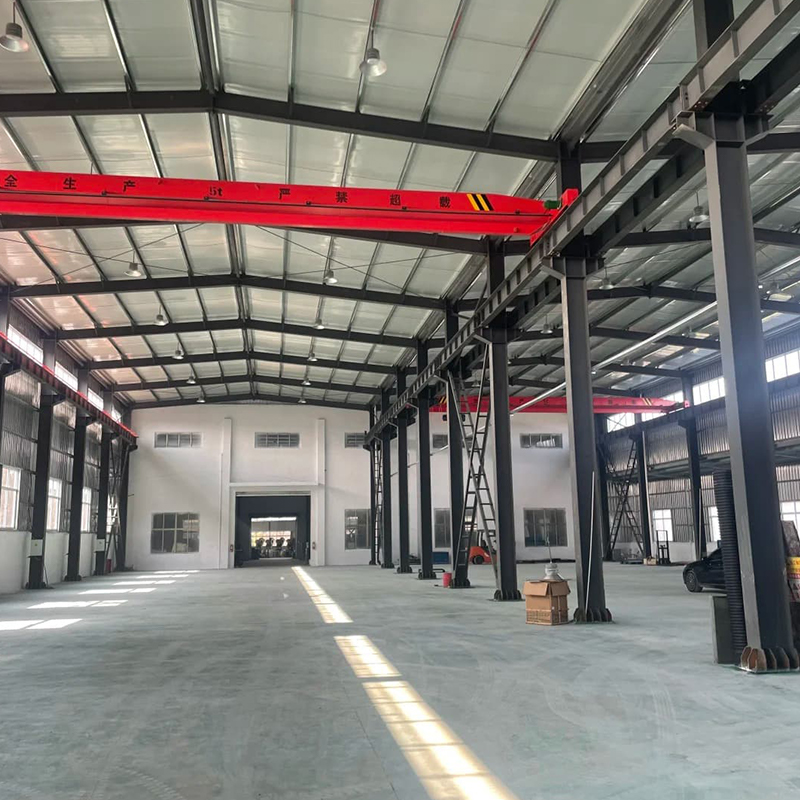
Hyson is a specialized manufacturer of Steel Formwork & Scaffolding, Steel Structure, and OEM Metal Fabrication. With over 15 years of expertise and a professional manufacturing base, we bridge the gap between complex engineering drawings and solid steel realities. From the iconic Sutong Yangtze River Bridge to power plants in Africa, our ISO-certified solutions are trusted by industry giants like CCCC and CRCC.
Manufacturing & Craftsmanship: Our professional fabrication base is engineered for high-efficiency, heavy-duty production.
Precision Profiling & Cutting: Hyson is a Custom Steel Building System Factory and Industrial Steel Structure Supplier, equipped with advanced medium-to-heavy plate laser cutting machines, ensuring high tolerance and clean edges for all custom steel components.
Artisan Welding: We combine heavy capacity with expert craftsmanship. Our team of certified senior welders (AWS / EN standards) expertly handles complex joints and non-standard fabrication that simple automation cannot match.
Innovation & Quality: Holding 12 Utility Patents, we operate under strict ISO 9001 and BS1139 / EN74 standards, guaranteeing consistency from raw material profiling to final assembly.
Hyson specializes in steel formwork, scaffolding, steel structure and OEM metal fabrication.
 +86-13646196162
 info@hysonindustry.com

Industrial Steel Structure Supplier
Steel structures are widely used in various buildings, factories, bridges, stadiums, warehouses, and overseas infrastructure projects. They are made from high-quality steel materials such as H-beams, I-beams, channel steel, and steel plates, through precision machining, welding, and anti-corrosion treatment. The products feature high strength, light weight, good seismic performance, fast construction speed, and are environmentally friendly and recyclable. They can be customized according to drawings and modularly installed. We are a manufacturer directly supplying export markets, providing a one-stop service including detailed design, production, anti-corrosion coating, packaging, shipping, and technical support. Our products are sold to many countries and regions worldwide, making them the preferred structural form for modern engineering construction.
About Us
Nantong Hyson Road And Bridge Formwork Co.,Ltd.
News
-
A high-rise curtain wall replacement in the Gulf needed access to a 40-story facade, but the ground floor was a landscaped lobby that could not host a supported scaffold...
READ MORE -
Three containers of ring lock scaffolding arrived on a Monday. By Wednesday the site crew had rejected two of them — not because the steel was thin or the galvanizing pa...
READ MORE -
Tanzanian Clients Visit Nantong Hyson to Inspect Custom Steel Formwork Production Nantong Hyson Road And Bridge Formwork Co., Ltd. recently welcomed a delegation of clien...
READ MORE -
A 250 mm thick concrete slab weighs about 600 kg per square metre before anyone stands on it. Add the formwork itself, the pouring crew, a skip landing faster than plann...
READ MORE -
On a bridge pier or a congested industrial plant, the difference between a productive scaffold and a costly delay often comes down to the connection node. A cuplock scaf...
READ MORE
Message Feedback
Steel Structure Industry knowledge
What Defines a High-Performance Steel Structure
A steel structure is a load-bearing framework built from fabricated steel members — columns, beams, trusses and connection plates — engineered to support heavy loads while using less material than concrete or timber alternatives. Modern steel structure systems are prefabricated off-site under controlled factory conditions, then transported and bolted or welded together on location, which shortens construction schedules significantly compared with cast-in-place methods.
As a professional manufacturer focusing on custom steel formwork, ringlock scaffolding, heavy-duty steel structures and OEM metal fabrication, Hyson equips its production lines with advanced laser cutting equipment and standardized workflows, integrating automated processing with certified AWS and EN welding craftsmanship to deliver high-precision, non-standard steel components for demanding infrastructure projects.
Key Advantages of Steel Structure Systems
Compared with traditional building methods, steel structures offer measurable performance benefits across the full project lifecycle:
- High strength-to-weight ratio — steel members carry greater loads per unit weight, reducing foundation requirements.
- Faster installation — prefabricated components are assembled on site with bolted or welded connections, cutting weather-related delays.
- Dimensional accuracy from CNC and laser-cut profiling, minimizing on-site rework.
- Recyclable material composition, supporting long-term sustainability goals.
- Design flexibility for long-span, heavy-industry and multi-story configurations.
How Steel Structural Fabrication Works
Manufacturing a steel structure follows a sequential process that determines the final product's strength, accuracy and finish quality.
1. Profiling and Cutting
Medium-to-heavy steel plates are processed on laser or plasma cutting machines to achieve tight tolerances and clean edges before further shaping.
2. Forming and Assembly
Cut components are bent, rolled or machined into their final geometry, then positioned for joining according to the structural drawing.
3. Welding and Finishing
Certified senior welders working to AWS and EN standards handle complex joints and non-standard fabrication that automated welding alone cannot achieve, followed by surface treatment such as galvanizing or painting for corrosion resistance.
Steel Structure vs Traditional Building Methods
The table below summarizes typical differences reported across infrastructure and industrial construction projects.
| Factor | Steel Structure | Reinforced Concrete |
|---|---|---|
| Construction Speed | Faster, prefabricated assembly | Slower, requires curing time |
| Span Capability | Suited to long-span layouts | Limited without added support |
| Weight | Lighter per load capacity | Heavier overall structure |
| Site Modification | Easier to extend or adjust | More difficult, labor-intensive |
Standards and Quality Control in Steel Structure Manufacturing
Reliable steel structure production depends on full-process quality control rather than final inspection alone. Reputable manufacturers operate under recognized frameworks such as ISO 9001, BS1139 and EN74, covering everything from raw material selection to welding procedure qualification and dimensional verification before shipment.
Suppliers holding multiple utility patents and serving central state-owned engineering contractors typically apply the same mega-project manufacturing standards across all orders, which is an important benchmark when evaluating a factory's actual production capability rather than relying on marketing claims alone.
Choosing a Steel Structure Supplier for Large-Scale Projects
For bridge, power plant and industrial building projects, procurement teams should evaluate a supplier's fabrication capacity, welding certifications and project track record together, not in isolation.
- Confirm in-house laser cutting and heavy-plate processing capacity rather than outsourced fabrication.
- Request evidence of AWS/EN certified welders for complex or non-standard joints.
- Review completed references on comparable infrastructure, such as bridge or thermal power projects.
- Verify ISO and applicable regional standards compliance documentation.
Frequently Asked Questions
Q1: How long does a typical steel structure last?
With proper corrosion protection such as hot-dip galvanizing or protective coatings, a well-maintained steel structure can remain in service for several decades, depending on environmental exposure and maintenance schedule.
Q2: Is steel structure suitable for heavy industrial environments?
Yes. Steel structures are widely used in mining, power generation and transportation infrastructure because they can be engineered for high dynamic loads and harsh operating conditions.
Q3: Can steel structures be customized for non-standard project requirements?
Yes. OEM fabrication allows components to be designed to project-specific drawings, including irregular geometries and specialized connection details that standard catalog products cannot accommodate.
HAVE ANY QUESTIONS?
EMAIL US info@hysonindustry.com

Since 2011
©
Hyson.
All Rights Reserved.©

- Location
- Group 3, Fangzhuang Village, Rucheng Subdistrict, Rugao City, Nantong, Jiangsu, China
- Follow us
- Phone
- +86-13646196162
- info@hysonindustry.com
