



 русский
  عربى
عربى 

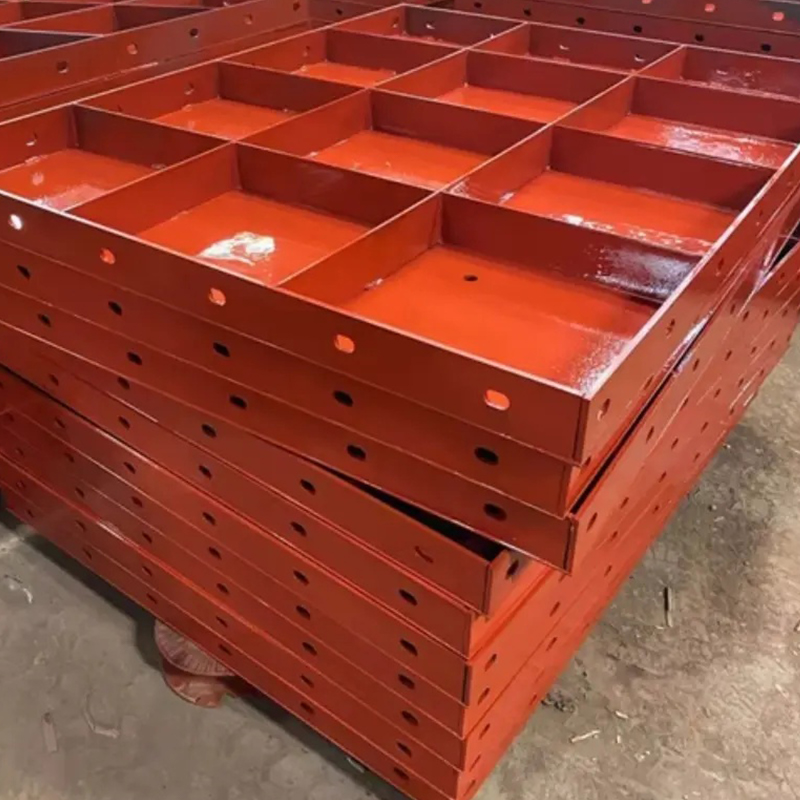
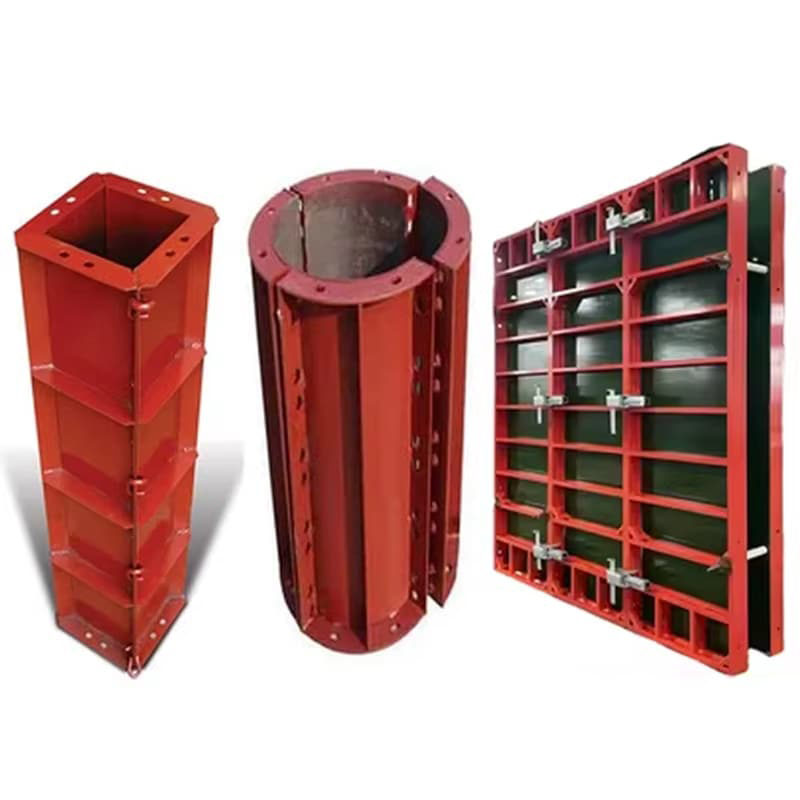
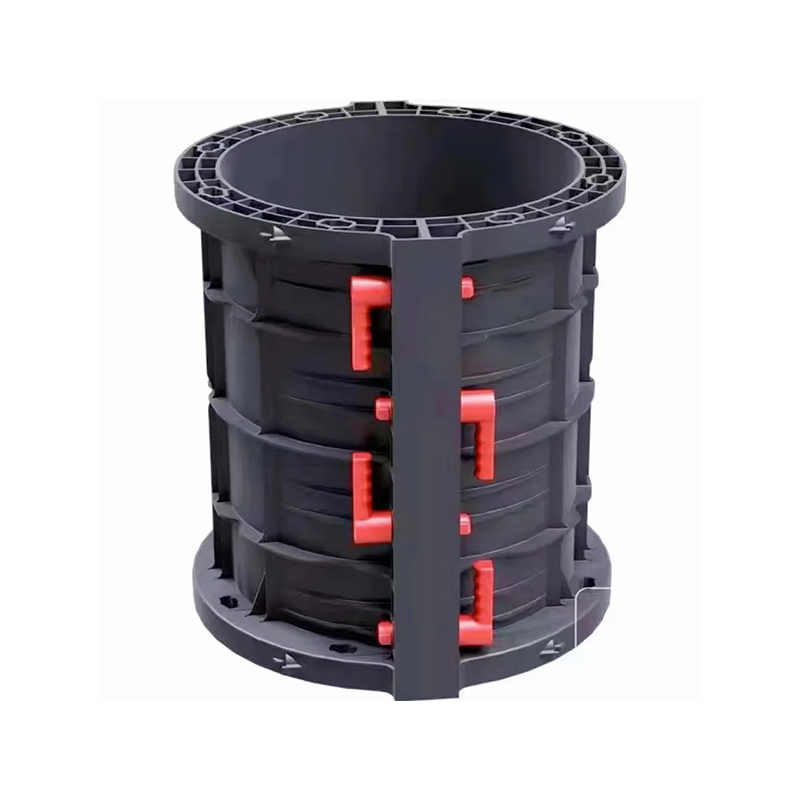
Hyson is a specialized manufacturer of Steel Formwork & Scaffolding, Steel Structure, and OEM Metal Fabrication. With over 15 years of expertise and a professional manufacturing base, we bridge the gap between complex engineering drawings and solid steel realities. From the iconic Sutong Yangtze River Bridge to power plants in Africa, our ISO-certified solutions are trusted by industry giants like CCCC and CRCC.
Manufacturing & Craftsmanship: Our professional fabrication base is engineered for high-efficiency, heavy-duty production.
Precision Profiling & Cutting: Hyson is a OEM Infrastructure Formwork Factory and Construction Steel Formwork Supplier, equipped with advanced medium-to-heavy plate laser cutting machines, ensuring high tolerance and clean edges for all custom steel components.
Artisan Welding: We combine heavy capacity with expert craftsmanship. Our team of certified senior welders (AWS / EN standards) expertly handles complex joints and non-standard fabrication that simple automation cannot match.
Innovation & Quality: Holding 12 Utility Patents, we operate under strict ISO 9001 and BS1139 / EN74 standards, guaranteeing consistency from raw material profiling to final assembly.
Hyson specializes in steel formwork, scaffolding, steel structure and OEM metal fabrication.
 +86-13646196162
 info@hysonindustry.com

Construction Steel Formwork Supplier
Steel formwork is made of high-quality Q235/Q355 steel, precision-welded and treated with anti-corrosion coating. It is a highly efficient concrete forming mold that replaces wooden formwork, meeting the construction needs of cast-in-place and precast components and providing stable, reliable formwork solutions for infrastructure projects worldwide. It is widely used in road and bridge, port and water conservancy, tunnel, civil buildings, municipal infrastructure, and other fields, suitable for various concrete components such as piers, box girders, guardrails, cap beams, wave-dissipating blocks, revetments, and walls, covering highway, railway, bridge, port, dam, and building construction projects. As a professional export-oriented steel formwork manufacturer, we strictly adhere to international standards in production, ensuring quality control throughout the entire process, from drawing refinement and CNC cutting to precision welding, overall trial assembly, and anti-corrosion coating. We can provide customized services for various non-standard, large, and irregular-shaped steel formwork according to customer project drawings and local construction specifications. Product advantages:" High strength, durable, and resistant to deformation, with a high reusability; tight splicing, resulting in beautiful and precise concrete molding; recyclable, offering better cost performance; caters to both standard and custom-made specifications; environmentally friendly and recyclable; complete specifications and standardized packaging, suitable for global export needs.
About Us
Nantong Hyson Road And Bridge Formwork Co.,Ltd.
News
-
A high-rise curtain wall replacement in the Gulf needed access to a 40-story facade, but the ground floor was a landscaped lobby that could not host a supported scaffold...
READ MORE -
Three containers of ring lock scaffolding arrived on a Monday. By Wednesday the site crew had rejected two of them — not because the steel was thin or the galvanizing pa...
READ MORE -
Tanzanian Clients Visit Nantong Hyson to Inspect Custom Steel Formwork Production Nantong Hyson Road And Bridge Formwork Co., Ltd. recently welcomed a delegation of clien...
READ MORE -
A 250 mm thick concrete slab weighs about 600 kg per square metre before anyone stands on it. Add the formwork itself, the pouring crew, a skip landing faster than plann...
READ MORE -
On a bridge pier or a congested industrial plant, the difference between a productive scaffold and a costly delay often comes down to the connection node. A cuplock scaf...
READ MORE
Message Feedback
Steel Formwork Industry knowledge
What Is Steel Formwork?
Steel Formwork is a reusable steel mold system used to shape fresh concrete into designed structural components, such as bridge piers, box girders, retaining walls, columns, beams, tunnels and large infrastructure panels. Compared with timber or simple temporary molds, it offers stronger rigidity, better dimensional control and longer service life for repeated concrete casting work.
Large Panel Steel Formwork is designed for projects that require wide, flat and consistent concrete surfaces. It is commonly used in walls, bridge structures, water conservancy works, civil buildings and precast yards where fast assembly, fewer joints and stable concrete appearance are important.
Main Advantages of Steel Formwork
The core value of Steel Formwork lies in strength, repeatability and construction efficiency. When fabricated with Q235 or Q355 steel and reinforced by stiffeners, the formwork can maintain shape under concrete pressure and vibration, helping contractors reduce surface defects and dimensional deviation.
- High rigidity: steel panels resist deformation during pouring, especially in large-area concrete work.
- Reusable structure: proper cleaning, coating and storage can extend usage across multiple casting cycles.
- Clean concrete finish: tight panel joints help improve surface flatness and reduce later repair work.
- Custom adaptability: non-standard shapes can be produced according to project drawings and site requirements.
- Recyclable material: steel is suitable for long-term engineering use and recycling after service life.
How Large Panel Steel Formwork Works
Large Panel Steel Formwork works by combining face plates, ribs, frames, connectors and support systems into a stable mold. After positioning and alignment, workers lock the panels, apply release agent, place reinforcement, and pour concrete into the designed cavity. The steel surface controls the final shape until the concrete reaches sufficient strength for demolding.
Typical Working Process
- Review drawings and confirm panel size, load condition and concrete pressure.
- Complete cutting, bending, welding and trial assembly before delivery.
- Install panels on site with bolts, clamps, tie rods or supporting frames.
- Check verticality, flatness and joint tightness before concrete pouring.
- Remove panels after curing and prepare them for the next casting cycle.
Common Applications in Construction Projects
Steel Formwork is especially suitable for infrastructure projects with repeated components, heavy concrete sections or strict forming requirements. In bridge and road engineering, it is often used for piers, cap beams, guardrails, T-beams and box girders. In municipal and building construction, it can support walls, columns, slabs and foundation structures.
| Project Type | Typical Components | Key Requirement |
|---|---|---|
| Bridge Engineering | Piers, beams, guardrails | Strength and dimensional accuracy |
| Building Construction | Walls, columns, slabs | Flat surface and fast assembly |
| Precast Concrete | Panels and special molds | Repeat casting and stable finish |
How to Choose the Right Steel Formwork
A practical selection should start from the concrete component size, pouring height, expected reuse frequency and transportation conditions. For large wall or bridge sections, Large Panel Steel Formwork can reduce joint quantity and improve forming speed. For irregular components, customized steel molds are usually more reliable than standard modular panels.
- Check whether the manufacturer can refine drawings before production.
- Confirm steel grade, plate thickness, rib layout and welding process.
- Ask for trial assembly when the mold is large, curved or non-standard.
- Choose anti-corrosion coating when the formwork is used outdoors or shipped overseas.
Manufacturing Capability Matters
Nantong Hyson Road And Bridge Formwork Co.,Ltd. focuses on custom steel formwork, ringlock scaffolding, heavy-duty steel structures and OEM metal fabrication. With laser cutting equipment, standardized production lines and AWS & EN welding craftsmanship, the company supports high-precision non-standard steel components for construction and industrial projects.
Its quality system is supported by 12 utility patents and compliance with ISO 9001, BS1139 and EN74 standards. For buyers, this means the selection of Steel Formwork should not only focus on price, but also on welding quality, assembly accuracy, inspection control and long-term project support.
Frequently Asked Questions
Q1: What is the difference between Steel Formwork and Large Panel Steel Formwork?
Steel Formwork is the general category of steel molds for concrete forming. Large Panel Steel Formwork refers to larger integrated panels used for wide walls, bridge sections and large-area concrete surfaces with fewer joints.
Q2: Can steel formwork be customized?
Yes. Customization can include panel size, curved shape, rib design, connector position, lifting points and surface treatment according to engineering drawings.
Q3: Why is steel formwork preferred for infrastructure projects?
It provides strong load resistance, accurate concrete shaping and repeated use, making it suitable for bridges, tunnels, roads, ports and heavy civil engineering structures.
Q4: What should be checked before purchasing?
Buyers should check drawings, material grade, welding standard, trial assembly process, coating method, packaging and after-sales technical support.
HAVE ANY QUESTIONS?
EMAIL US info@hysonindustry.com

Since 2011
©
Hyson.
All Rights Reserved.©

- Location
- Group 3, Fangzhuang Village, Rucheng Subdistrict, Rugao City, Nantong, Jiangsu, China
- Follow us
- Phone
- +86-13646196162
- info@hysonindustry.com
