 +86-13646196162
 info@hysonindustry.com




 русский
  عربى
عربى 


When to Remove Concrete Forms: Timing, Strength Rules & Safe Stripping Guide
 2026.09.04
Content
- 1 Typical Form Removal Times at a Glance
- 2 Strength Beats the Calendar, Every Time
- 3 What Moves the Stripping Time
- 4 The Cost of Stripping Too Early — or Leaving Forms On Too Long
- 5 A Stripping Sequence That Protects the Concrete
- 6 Formwork Quality Decides How Clean the Release Is
- 7 Key Takeaways for Your Next Pour
A wall crew finishing a column line on a July morning wants the forms off before the afternoon heat peaks; the same morning, a bridge crew is told the box girder soffits will stay propped for another week. Both decisions are correct. For most vertical formwork — walls, columns, and piers — concrete is ready to strip in 24 to 48 hours. For anything the concrete has to hold up, such as slab soffits, beams, and bridge decks, the calendar is only a starting point, because those forms come off against measured strength, not habit.
Removing forms well is really two questions in one. First, will the concrete survive the contact — will edges, corners, and surfaces come away clean? Second, can it carry the loads you are about to hand it once the formwork and props go? Answer both, in that order, and stripping stays safe and predictable.
Typical Form Removal Times at a Glance
The windows below follow guidance commonly cited from ACI 347 formwork practice. They assume an ordinary Portland cement mix, sound curing, and concrete temperatures roughly between 50°F and 70°F (10°C to 21°C). Where the project specification differs, the specification wins.
| Formwork element | Typical minimum time | Release condition |
|---|---|---|
| Walls, columns, piers (vertical forms) | 24–48 hours | No load carried; edges survive stripping |
| Slab soffits, props left in place, span under 10 ft (3 m) | About 3 days | Reshoring props remain in position |
| Slab soffits, props left in place, span 10–20 ft (3–6 m) | About 4 days | Longer spans gain strength more slowly |
| Slabs where props will be removed | About 7 days | Or earlier if tests confirm required strength |
| Beam and girder soffits, span under 10 ft | About 7 days | Props left under the member |
| Long-span or heavily loaded beams and bridge elements | 7–14 days | Release only against verified test strength |
Two patterns are worth reading out of the table. Vertical forms protect geometry, so they leave early; soffit forms carry load, so they stay until the section can span. Nearly every number above also assumes the props question has been answered — most of these times only work when reshoring remains in place.
Pier columns show the fast lane at its best. A circular column form can release within a day or two, and on a repetitive bridge substructure that cycle time effectively sets the pace of the whole deck program.
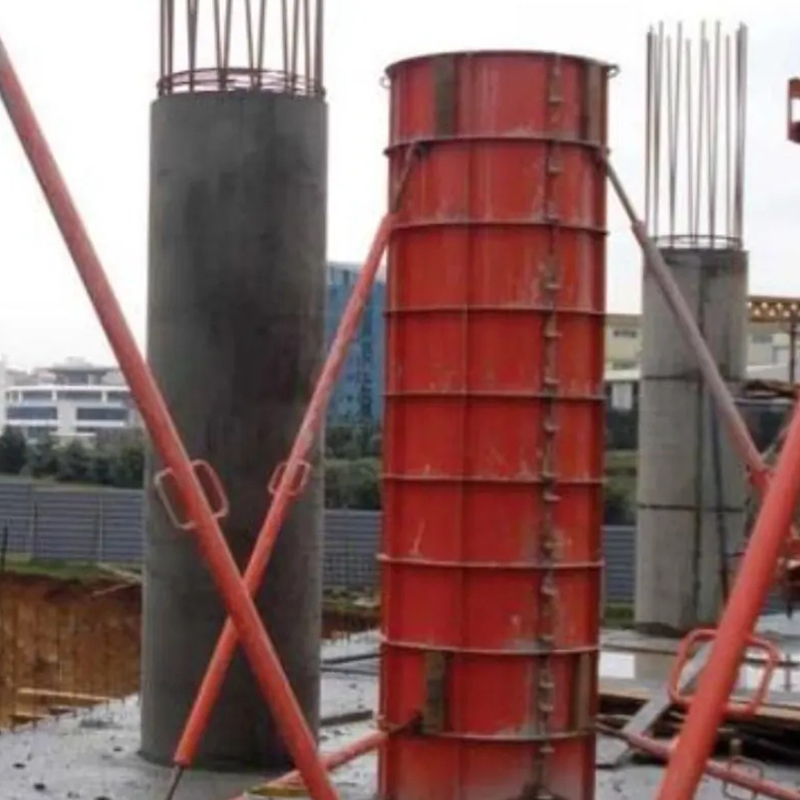 Circular Column Formwork for Smooth Bridge Pier ColumnsSteel arc modular forms that pour precise, smooth circular columns for bridge piers and building columns. Where repetitive substructure cycles set the deck schedule, reliable one-to-two-day strip times and fair-faced finishes make this system worth reviewing.View Product →
Strength Beats the Calendar, Every Time
Time tables assume one mix at one temperature, and jobsites rarely cooperate. A mix containing fly ash or slag gains strength slowly in cool weather; a high-early-strength mix can run days ahead of its printed table. The dependable answer is to measure what is actually happening inside the element.
Field-cured cylinders, or embedded sensors reading the maturity method, show real in-place strength. Many specifications tie stripping to a written threshold — commonly around 75% of design strength for members that will carry construction loads — and the project engineer sets that number. If nobody has written it down, get it in writing before the first prop comes out.
Strip against data, not against the clock. The table tells you the earliest the concrete might be ready; the tests tell you when it actually is.
What Moves the Stripping Time
Mix design
Cement type leads the list. High-early-strength cement and non-chloride accelerators pull stripping forward; fly ash, slag, and low water–cement ratios push it back, especially in cool weather. Some bridge mixes are even designed around 56-day strength, which makes early-age testing non-negotiable.
Temperature
Hydration slows sharply as concrete cools. A mix that strips in 24 hours at 70°F can need several extra days once temperatures sit in the 40s, which is why cold-weather concreting rules extend formwork and protection times rather than shorten them. Heat works the other way — faster strength gain, but a bigger risk of surface drying and thermal cracking when curing is careless.
Curing
Water curing and curing compounds keep moisture in the surface so it gains strength exactly where stripping does its damage — at the edges and corners. Wind, low humidity, and a hot form face can dry a slab's skin within an hour; a dried-out surface will bug-hole, dust, and chip no matter how strong the core has become.
Element size and loads
Massive sections hold their heat and gain early strength quickly; thin slabs cool fast and lag behind. Span length matters, and so does what sits on the member — bundled rebar, material buggies, and pumping equipment are construction loads the stripped concrete must carry immediately.
The Cost of Stripping Too Early — or Leaving Forms On Too Long
Strip too early and you pay twice
- Popped edges and corners that need patching — cosmetic on a wall, structural on a beam.
- Bug holes and sand streaks set deeper as the face tears away, so every finish costs more.
- Hidden micro-cracking and permanent deflection in slabs and beams that resurface as long-term serviceability problems.
- In the worst case, collapse of a soffit when props are released before the concrete can span between them.
Leave forms on too long and nothing improves
- Moisture trapped against the surface creates dark patchwork staining that grinding will not fix.
- Concrete keeps hardening and grips the form, so ties, wedges, and faces take damage that shortens reuse life.
- On steel forms, trapped condensation can leave rust staining that is expensive to remove.
- Form cycles stall, and on repetitive work a stalled cycle idles cranes, crews, and the pour schedule.
Leaving forms in place also stops adding meaningful strength after the first few days — properly cured concrete outperforms the same-age concrete that is simply kept behind formwork. And ordinary steel formwork is not permanent formwork; stay-in-place systems are a different product designed for that purpose, while a standard panel left trapped invites corrosion and staining.
Heavy bridge members show the stakes best. On a cast-in-place box girder, the soffit stays put until measured strength confirms the section can carry itself plus the next operation, because deflection in a long-span member is not something you patch afterwards.
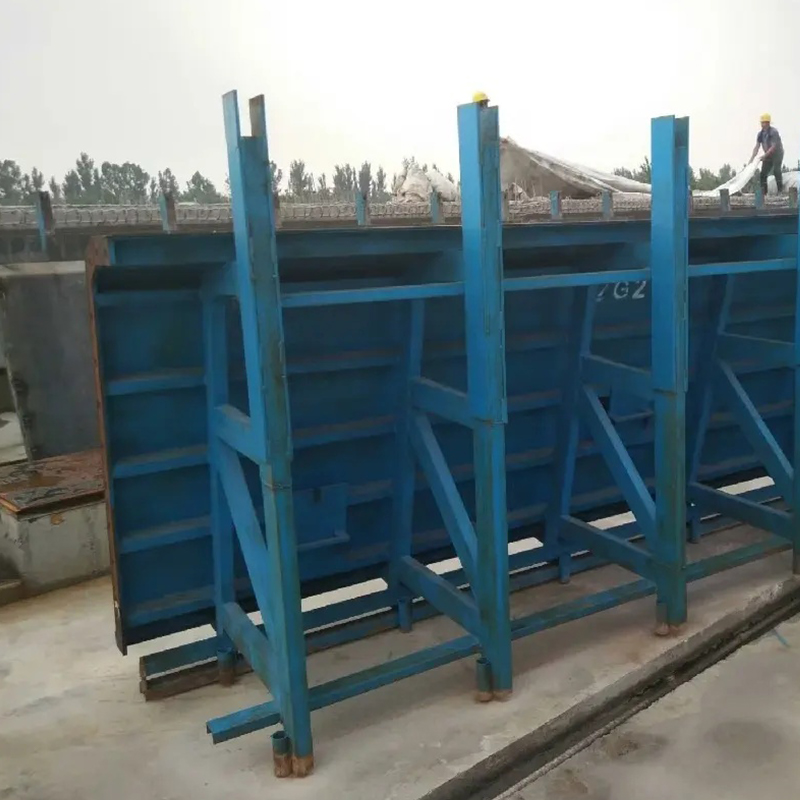 Box Girder Formwork for Bridge Casting and PrefabricationHeavy-duty Q235B/Q345 steel formwork with optional hydraulic inner-mold handling for cast-in-place and precast box girders. For long-span members where deflection cannot be patched afterwards, dimensional accuracy and deformation resistance are what matter most.View Product →
A Stripping Sequence That Protects the Concrete
A good crew strips in the same order every time, and that order is written down:
- Verify strength — test results or maturity readings — against the written release threshold.
- Strip vertical forms first, loosening ties and easing the face away with wooden wedges rather than steel bars against fresh corners.
- Remove formwork in the reverse order of erection and leave every load-bearing prop exactly where it stands.
- Keep reshoring under slabs and beams until the engineer releases it, transferring loads gradually instead of in one drop.
- Cure the exposed surfaces immediately, with wet hessian, misting, or a curing compound, especially in wind and heat.
- Record strip times, concrete temperatures, and any defects so the next cycle is planned on evidence rather than memory.
Reshoring Is Part of the Timing Decision
Back-propping is how a schedule buys speed safely. Adjustable steel props, fork heads, and jack bases under a young slab share its load while it finishes gaining strength — which is why the props stay even after the form face leaves. On heavier work, towers built from ringlock or cuplock systems carry the lines under bridge soffits; if you are weighing options, the main types of scaffolding each play a different role in that load path.
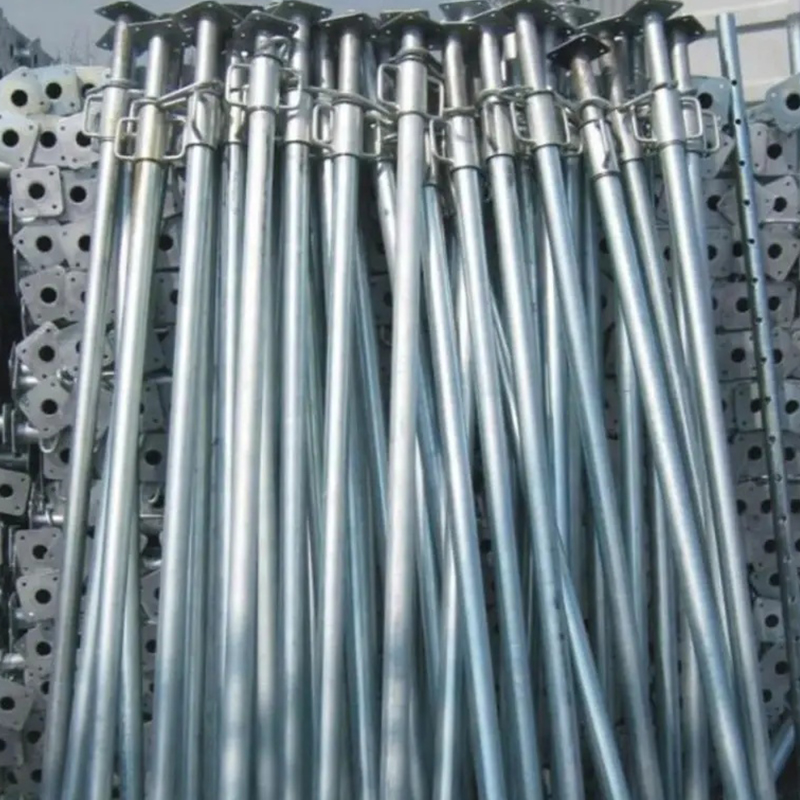 Adjustable Steel Props for Slab Back-ProppingHigh-strength telescopic steel props that carry slab and formwork loads while young concrete gains strength. Since props stay in place after the form face strips, load capacity and adjustability are key when buying back-propping equipment.View Product →
Formwork Quality Decides How Clean the Release Is
Stripping damage is often blamed on timing, but a good share of it is engineered into — or out of — the form itself. Smooth steel faces, tight joints, consistent tie spacing, and chamfered corners let a panel release at 24 hours without tearing the surface, while a warped or poorly welded panel will mark the concrete no matter how long it stays on. If you are comparing systems, it helps to start with what steel formwork is and how the panels are actually built.
That is the thinking behind how we build formwork at Hyson. Custom steel systems for circular pier columns, box girders, and T-beams are designed around the full cycle: rigid frames that hold geometry when props release, tie patterns laid out for predictable de-tensioning, and faces that strip clean pour after pour, so the same set earns its keep across hundreds of reuses on site.
Key Takeaways for Your Next Pour
- Treat 24–48 hours as a floor for vertical forms in fair weather, never a target to chase in the cold.
- Slabs, beams, and decks come off against measured strength, with 75% of design strength a common specification threshold.
- Reshoring stays until the engineer releases it — the form face leaving is not the load leaving.
- Plan formwork, props, and curing as one system, because each one shifts the timing of the others.
When the release threshold is written down, the test data is current, and the formwork was built to strip clean, form removal stops being a gamble and becomes just another scheduled step in the pour.


- Location
- Group 3, Fangzhuang Village, Rucheng Subdistrict, Rugao City, Nantong, Jiangsu, China
- Follow us
- Phone
- +86-13646196162
- info@hysonindustry.com
