 +86-13646196162
 info@hysonindustry.com




 русский
  عربى
عربى 


What Is Steel Formwork?
 2026.06.22
Content
- 1 What Is a Steel Formwork? A Complete Guide for Construction Professionals
- 2 Core Components of a Steel Formwork System
- 3 Adjustable Cap Formwork: Precision for Every Column Size
- 4 Zero-Leakage Concrete Formwork: Why Tight Joints Are Non-Negotiable
- 5 Steel Formwork vs. Timber and Aluminum: A Practical Comparison
- 6 Types of Steel Formwork and Their Best Applications
- 7 Steel Formwork and Pre-Engineered Steel Structures: A Natural Partnership
- 8 How to Select the Right Steel Formwork System
- 9 Maintenance and Longevity: Getting the Most from Steel Formwork
- 10 Summary: Steel Formwork Is the Engineering Foundation of Modern Concrete Construction
What Is a Steel Formwork? A Complete Guide for Construction Professionals
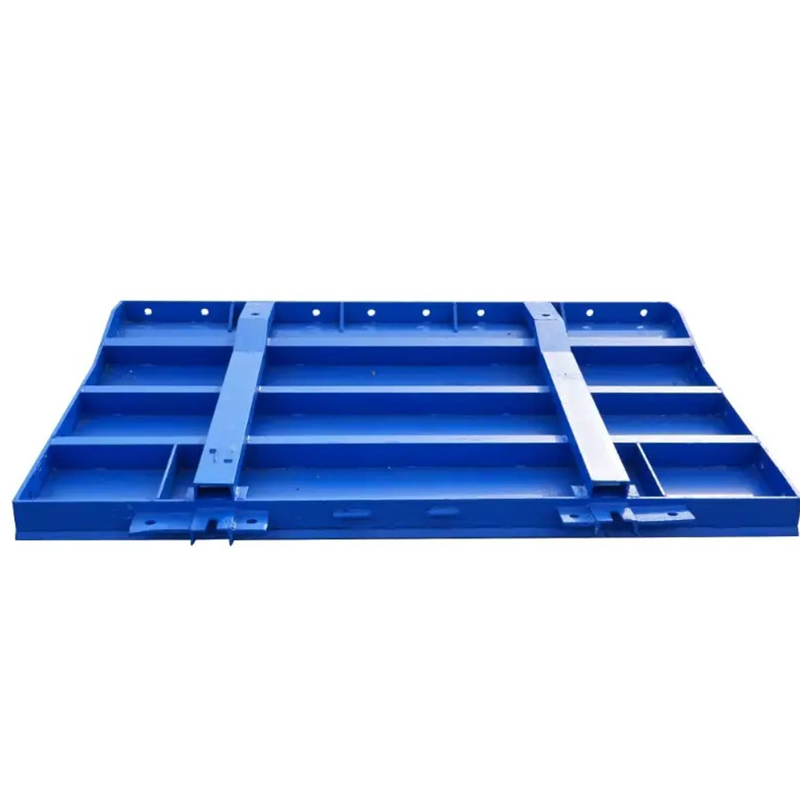
Steel formwork is a temporary or reusable mold system made from steel panels, frames, and stiffeners used to shape and support freshly poured concrete until it achieves sufficient structural strength. Unlike timber or plywood alternatives, steel formwork delivers superior dimensional accuracy, extended service life, and the ability to withstand fresh concrete pressures of up to 100 kN/m²—making it the preferred choice for high-rise buildings, bridges, tunnels, and industrial facilities.
In simple terms: if you need consistent concrete quality, smooth surface finishes, and a forming system that can be reused 100 or more times per unit, steel formwork is the engineering answer your project demands.
Core Components of a Steel Formwork System
A complete steel formwork system is more than a set of panels. Each component plays a defined structural role:
| Component | Material / Specification | Primary Function |
|---|---|---|
| Face Panels | Q235 / Q345 steel plate | Direct contact with concrete; shapes the finished surface |
| Steel Frame / Stiffeners | Hollow section or channel steel | Provides rigidity and load-bearing capacity |
| Flat Tie / Form Tie Rod | High-tensile steel rod | Resists lateral pressure; locks opposing panels together |
| Wedge Pin / Wedge Bolt | Drop-forged steel | Secures panel connections without tools or welding |
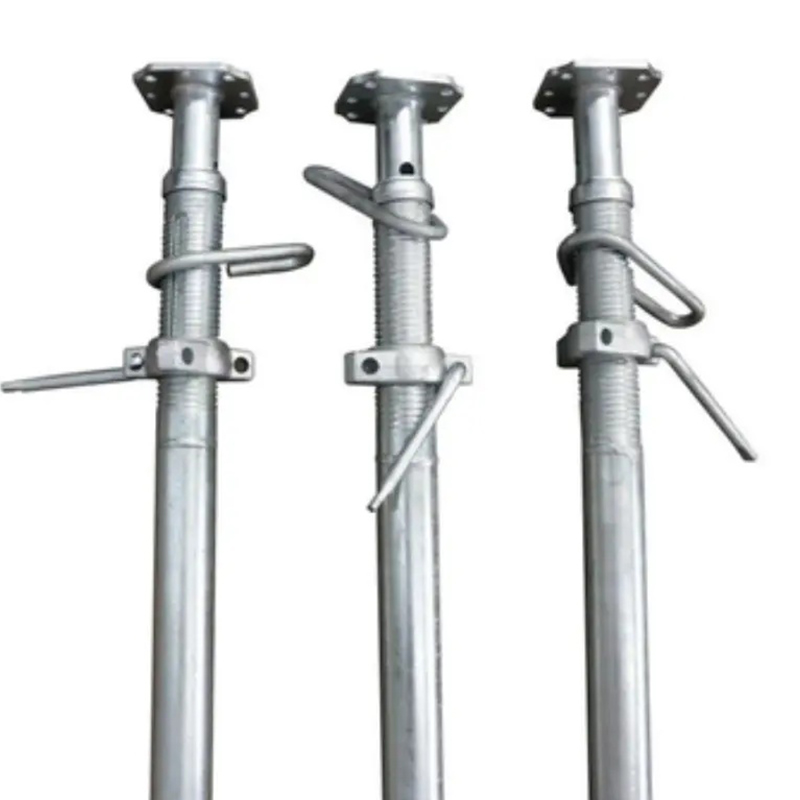
| Adjustable Steel Props | Per EN 1065 (Class A–E) | Vertical support for slab and beam formwork |
| Corner / Cap Units | Machined or welded steel | Seals panel joints; prevents concrete leakage at edges |
Understanding each component helps site engineers select the right system for the specific pour pressure, reuse target, and structural geometry their project demands.
Adjustable Cap Formwork: Precision for Every Column Size
One of the most practical innovations within the steel formwork family is the Adjustable Cap Formwork for columns. Standard column forms are rigid, meaning they only suit a single cross-section size. Adjustable cap systems solve this problem by incorporating threaded bolts and sliding panels that allow the form to expand or contract—horizontally and vertically—to match column heights and widths specified in the structural drawings.
Why adjustability matters on site
- A single adjustable steel column form can cover a range of cross-sections, eliminating the need to purchase or rent multiple fixed-size panels for one project.
- Quick adjustment with adjustable bolts means less downtime between pours—a critical efficiency gain on projects with repetitive floor plans.
- The rigid steel frame maintains exact geometry across every pour cycle, so each column in a high-rise building aligns to tolerance without manual correction.
- Reusability across different project types makes the system economically attractive for formwork rental companies and large contractors alike.
Adjustable cap formwork is particularly recommended for commercial towers, infrastructure works, and any project where column dimensions vary floor by floor or section by section.
Zero-Leakage Concrete Formwork: Why Tight Joints Are Non-Negotiable
Concrete leakage at formwork joints is one of the most common—and most costly—quality defects on construction sites. Leaked cement paste produces surface honeycombing, weakens the structural element, and often requires expensive patching or even demolition and re-pour. Zero-leakage concrete formwork systems address this problem through precision-machined panel edges, interlocking wedge connections, and sealed cap units that eliminate gaps at every joint.
How steel formwork achieves leak-free performance
Steel panels are manufactured to tight dimensional tolerances—unlike plywood, which swells, warps, and creates gaps after moisture exposure. The specific design features that prevent leakage include:
- Flat, machined frame edges that mate flush when panels are connected, closing the joint before any concrete pressure is applied.
- Strong locking systems—wedge pins, flat ties, and clamps—that keep panel alignment under the lateral pressure of a full concrete pour without allowing panels to separate.
- Corner and cap units with overlapping geometry that seal edge and end conditions where two panels meet at an angle.
- Steel face plate rigidity that resists bulging and deformation even when fresh concrete pressure approaches 60–100 kN/m².
For water-retaining structures—tanks, reservoirs, dams, and underground chambers—zero-leakage performance is not an aesthetic preference; it is a structural and regulatory requirement. Steel formwork's inherent dimensional stability makes it the standard solution for these demanding applications.
Steel Formwork vs. Timber and Aluminum: A Practical Comparison
| Criterion | Steel Formwork | Timber Formwork | Aluminum Formwork |
|---|---|---|---|
| Reuse Cycles | 100–500+ | 5–20 | 100–300 |
| Max Concrete Pressure | Up to 100 kN/m² | Limited | Up to 60 kN/m² |
| Dimensional Stability | Excellent | Poor (moisture warping) | Very Good |
| Leakage Risk | Very Low | High | Low |
| Weight | Heavy (crane often needed) | Medium | Light (crane-independent) |
| Initial Cost | Higher | Lower | Higher |
| Long-Term Cost per Use | Lowest | Highest | Low |
| Customization | Full (walls, columns, slabs, tunnels) | High (cut to shape on site) | Moderate |
For medium to large projects with repetitive structural layouts, steel formwork consistently delivers the lowest cost per pour when the full project lifecycle is considered.
Types of Steel Formwork and Their Best Applications
Wall Formwork
Steel wall formwork panels are modular units designed for casting vertical concrete walls. Standard panel sizes typically range from 600×900 mm up to 900×1800 mm, assembled in combinations to match any wall height or length. They are widely used in residential towers, commercial buildings, retaining walls, tunnels, and underground basements.
Column Formwork
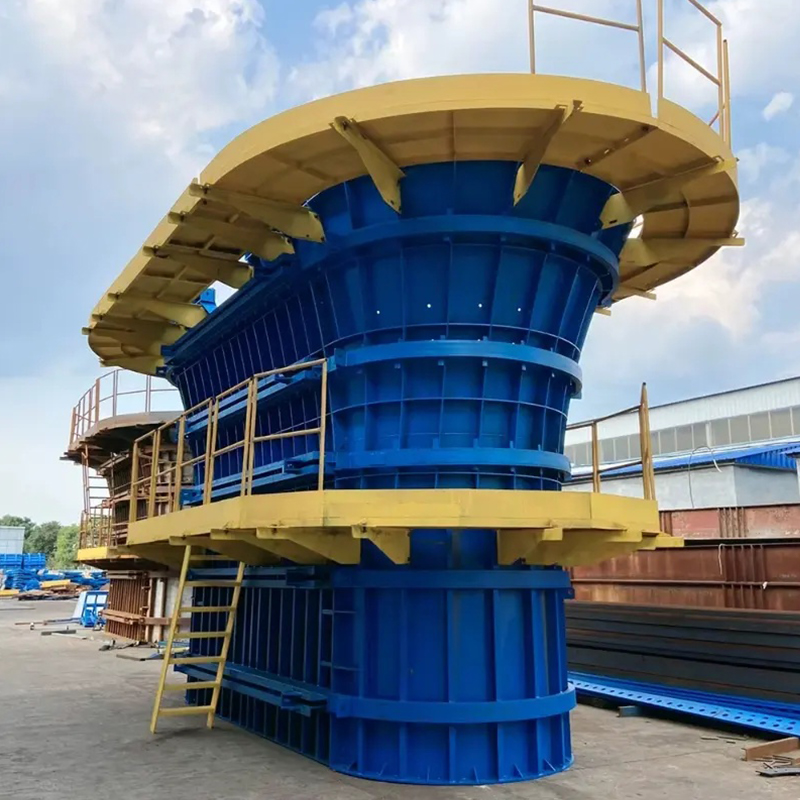
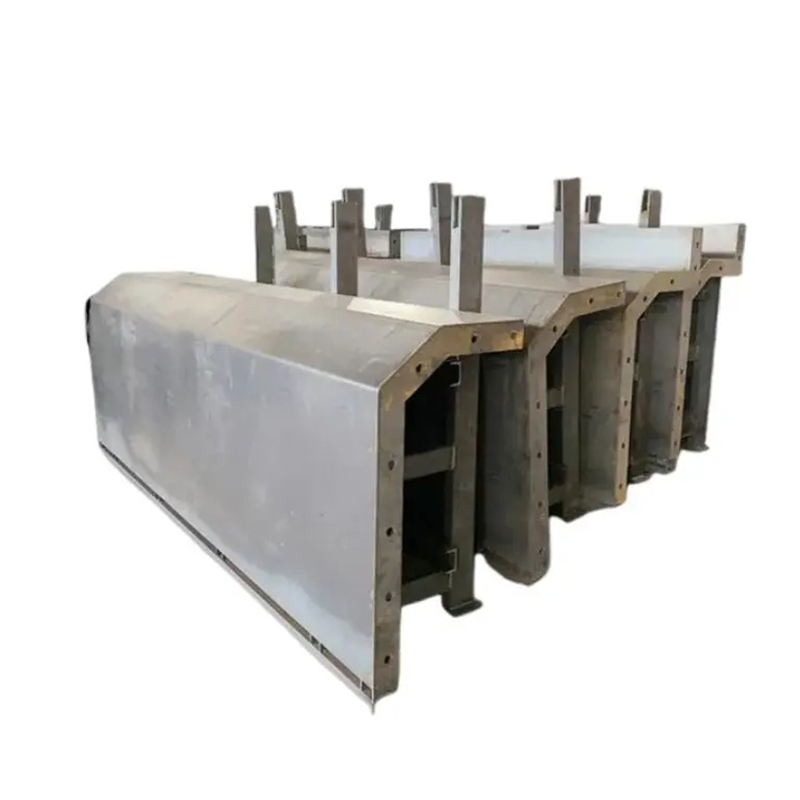
Available in fixed or adjustable configurations, steel column formwork creates square, rectangular, or circular columns with consistent cross-sections. Adjustable systems cover a range of column dimensions from a single set of panels, reducing equipment inventory on multi-storey projects.
Slab and Beam Formwork
Slab formwork consists of horizontal steel deck panels supported by adjustable steel props. The prop height can be set precisely to match floor-to-floor height, and the panels are removed and reset for each successive floor level. For clear-span industrial slabs or bridge decks, steel slab formwork supports the full concrete pour weight without deflection.
Single-Side Wall Formwork
Used when access to one face of a wall is restricted—against an existing structure or an excavated face—single-side steel formwork anchors through the slab or footing and resists the full concrete pressure from one direction only. This system is common in basement construction and infrastructure retrofits.
Tunnel and Circular Formwork
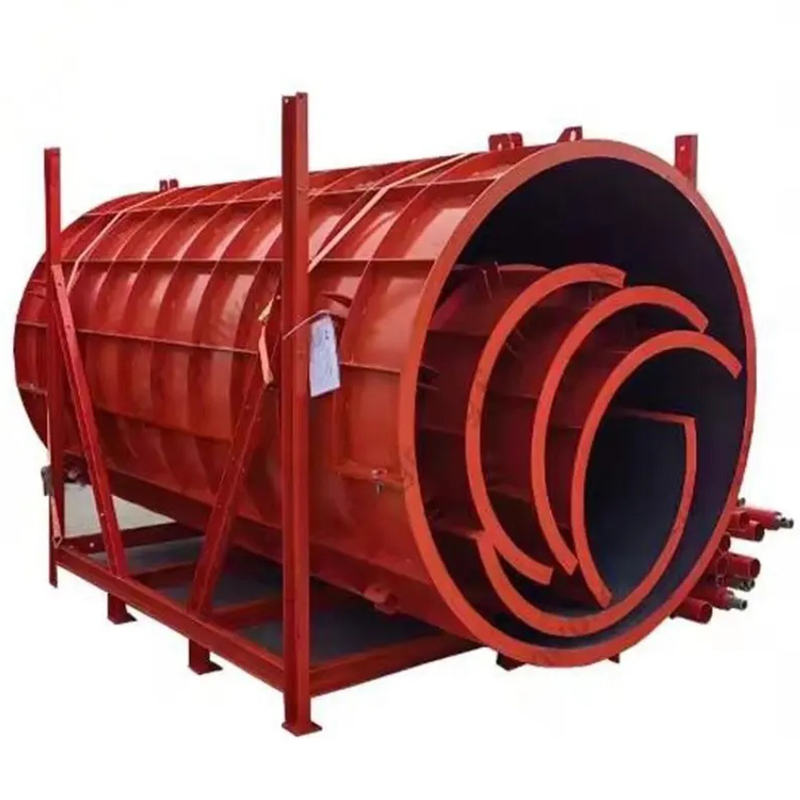
Curved steel panels can be fabricated to specific radii for tunnel linings, circular columns, and architectural curved walls. The rigid steel sections hold their radius under pour pressure, producing smooth interior surfaces that require minimal finishing.
Steel Formwork and Pre-Engineered Steel Structures: A Natural Partnership
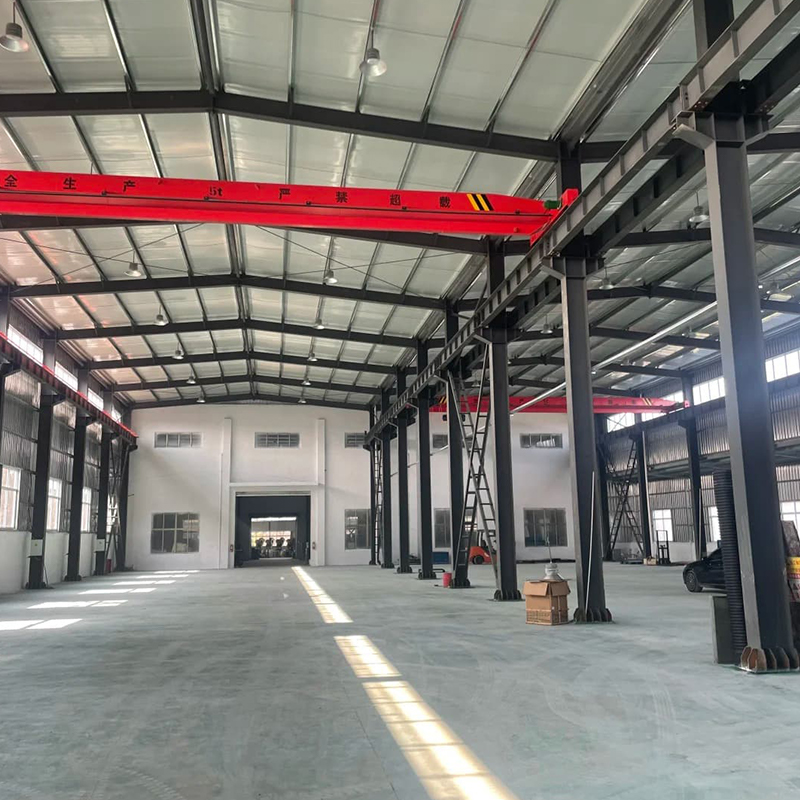
Steel formwork does not exist in isolation—it is frequently used in the construction of buildings that themselves are built from steel. Clear Span Steel Structure Workshops and Pre-engineered Warehouse Buildings often incorporate concrete foundations, floor slabs, and load-bearing cores that require steel formwork during the construction phase.
Why this connection matters for project planning
- The foundations of a pre-engineered warehouse building must be poured with high-precision steel formwork to achieve the anchor bolt positions required by the structural steel frame—any dimensional error transfers directly to misaligned primary frames.
- Clear span workshop designs eliminate interior columns, so perimeter concrete walls and pilasters that support the steel roof system must be formed to exact height and alignment tolerances—a task where steel wall formwork excels.
- The modular, reusable nature of steel formwork aligns with the efficiency philosophy behind pre-engineered buildings: standardized components, fast installation, and minimal on-site waste.
When a supplier provides both structural steel systems and compatible steel formwork solutions, it streamlines procurement, simplifies engineering coordination, and reduces the risk of interface errors between the concrete and steel phases of a project.
How to Select the Right Steel Formwork System
Choosing the appropriate steel formwork involves matching system specifications to project variables. Consider the following decision criteria:
- Concrete pour pressure: Calculate the expected lateral pressure based on pour rate, concrete unit weight, and element height. Select panel and tie rod specifications that exceed this value with an appropriate safety factor.
- Structural geometry: Walls, columns, slabs, and curved elements each require different panel configurations. Confirm that the selected system can be combined and extended to cover all structural types on your project.
- Reuse target: Estimate the number of pour cycles across the project. If the system will be used more than 50 times, heavy-duty steel panels with hot-dip galvanized or powder-coated surface treatment will minimize maintenance costs.
- Surface finish requirement: Exposed architectural concrete demands a smooth, release-agent-compatible steel face. Standard structural concrete can tolerate minor surface imperfections.
- Site handling equipment: Heavy steel gang forms require crane support. For sites without crane access, lighter modular hand-set panels or steel-ply systems combining steel frames with plywood faces offer a practical alternative.
- Supplier support: A reliable supplier should provide layout drawings, connection details, and engineering calculations before delivery—reducing on-site problem-solving and installation errors.
Maintenance and Longevity: Getting the Most from Steel Formwork
Steel formwork is a capital investment. With the right maintenance routine, a quality system can remain productive for decades. The key practices include:
- Clean after every use: Remove concrete residue from panel faces and frame edges before it hardens. Hardened concrete creates uneven surfaces that cause joint leakage on the next pour.
- Apply release agent before each pour: A thin, even coat of mold-release oil reduces adhesion between the steel face and concrete, protecting the surface finish and making stripping faster.
- Inspect and repair coatings: Chipped paint or damaged galvanizing exposes base steel to corrosion. Touch up damaged areas promptly, especially in coastal or high-humidity environments.
- Store panels flat and covered: Stack panels on level ground away from moisture and direct weather exposure to prevent warping of frame members and face plates.
- Check connectors and ties: Wedge pins, flat ties, and clamps experience repetitive load cycles. Inspect for deformation or cracking and replace worn components before they compromise joint integrity.
Formwork that receives this level of care routinely achieves 200+ reuse cycles, spreading the initial investment over a very large number of pours and delivering a cost-per-use that no single-use timber system can match.
Summary: Steel Formwork Is the Engineering Foundation of Modern Concrete Construction
From adjustable cap formwork for variable column sizes to zero-leakage wall systems for water-retaining structures, steel formwork provides the precision, strength, and reusability that concrete construction demands at scale. Its compatibility with pre-engineered warehouse buildings and clear span steel structures makes it the logical choice when concrete and structural steel must work together to millimetre-level tolerances.
Whether you are planning a high-rise residential tower, a pre-engineered industrial facility, or a large infrastructure project, the right steel formwork system reduces material waste, accelerates pour cycles, and delivers surface finishes that require minimal remediation. Choosing a supplier with engineering support, custom fabrication capability, and proven project references is the single most important step toward getting that outcome.


- Location
- Group 3, Fangzhuang Village, Rucheng Subdistrict, Rugao City, Nantong, Jiangsu, China
- Follow us
- Phone
- +86-13646196162
- info@hysonindustry.com
