 +86-13646196162
 info@hysonindustry.com




 русский
  عربى
عربى 


What are the advantages of using structural steel?
 2026.06.22
Content
- 1 The Core Advantages of Using Structural Steel — A Direct Answer
- 2 High Strength-to-Weight Ratio: More Load Capacity, Less Dead Weight
- 3 Faster Construction: Steel Structures Are Built in a Fraction of the Time
- 4 Design Flexibility: Steel Structures Adapt to Almost Any Form or Function
- 5 Durability and Long Service Life: Steel Structures Built to Last Decades
- 6 Sustainability and Recyclability: Steel Is the Most Recycled Material in Construction
- 7 Cost-Effectiveness Over the Full Building Lifecycle
- 8 Key Steel Structure Components and What Each Does
- 9 Steel Structure Applications Across Industries
- 10 What to Look for When Sourcing a Steel Structure Supplier
The Core Advantages of Using Structural Steel — A Direct Answer
Structural steel offers exceptional strength-to-weight ratio, rapid construction speed, design flexibility, full recyclability, and long-term durability — advantages that make it the preferred building material for warehouses, industrial facilities, commercial buildings, and infrastructure projects worldwide. When compared to concrete or timber, a steel structure consistently delivers lower total lifecycle costs, shorter project timelines, and far greater adaptability to future changes in use.
For buyers and project planners evaluating steel structure solutions, understanding these advantages in concrete, practical terms is essential for making informed procurement decisions.
High Strength-to-Weight Ratio: More Load Capacity, Less Dead Weight
One of the most defining characteristics of structural steel is its ability to carry very large loads while adding minimal weight to the structure itself. Steel's strength-to-weight ratio is significantly higher than that of concrete, which means a steel structure can span greater distances and carry heavier loads without requiring the dense column grids that concrete buildings demand.
What This Means in Practice
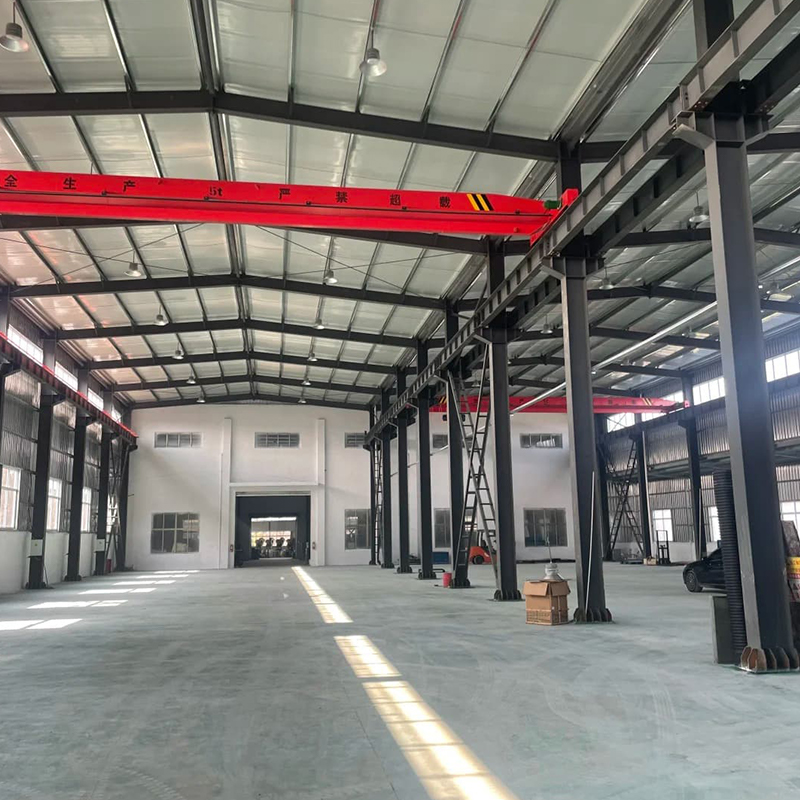
- Steel warehouse structures can achieve clear-span interior widths exceeding 60 meters, creating entirely column-free floor space ideal for heavy racking systems, forklift access, and automated sorting equipment.
- The cross-sectional area of a steel column is approximately half that of an equivalent concrete column, directly increasing the usable floor area of the building.
- Lighter structural deadweight reduces the demands placed on the foundation, often lowering foundation costs on projects with moderate soil bearing capacity.
This structural efficiency is especially valuable in industrial and logistics applications, where maximizing usable interior volume — both horizontally and vertically — directly translates into operational throughput and storage density.
Faster Construction: Steel Structures Are Built in a Fraction of the Time
Speed is one of the most commercially significant advantages of steel structure construction. Because structural steel components are precision-fabricated in a controlled factory environment and delivered to site ready to assemble, the on-site construction phase is dramatically shorter than traditional concrete or masonry construction.
Factory Prefabrication and On-Site Assembly
In a steel structure project, all primary members — columns, beams, rafters, purlins, and connection plates — are cut, drilled, welded, and surface-treated at the fabrication facility before shipment. On site, skilled crews bolt and weld the components together following pre-approved engineering drawings. This approach eliminates most of the wet-trade delays (formwork, curing, backfill) that extend concrete project timelines.
- Steel frame erection for a mid-size industrial building can be completed in weeks rather than months.
- Roofing and wall cladding installation can proceed in parallel with interior fit-out once the frame is erect.
- Earlier project completion means earlier revenue generation — a decisive factor in logistics and manufacturing facility investments.
Pre-Engineered Steel Structure Systems
Pre-engineered steel structure systems — where the entire building is designed as an integrated kit of standard components — further compress construction timelines. The engineering is resolved in the factory; the site crew assembles a proven system, not a unique one-off structure. This reduces on-site decision-making, rework, and quality variation.
Design Flexibility: Steel Structures Adapt to Almost Any Form or Function
Structural steel is one of the most geometrically versatile building materials available. It can be rolled, cut, welded, and bolted into virtually any shape, allowing architects and engineers to realize complex roof profiles, large cantilevers, multi-story frames, and unusual plan geometries that would be impractical or prohibitively expensive in concrete.
Common Steel Structure Building Types
| Building Type | Typical Steel Structure Configuration | Key Advantage |
|---|---|---|
| Industrial Warehouse | Single-slope or double-slope rigid frame | Large clear-span, low cost per sq. m |
| Manufacturing Workshop | Heavy-frame portal with crane runway beams | Overhead crane integration, high load capacity |
| Logistics Distribution Center | Multi-bay clear-span with mezzanine | Maximizes vertical storage, easy future expansion |
| Aircraft Hangar | Wide-span truss or space frame | Unobstructed interior for large aircraft |
| Multi-Story Commercial Building | Moment-resistant or braced frame | Floor-to-floor flexibility, fast erection |
Ease of Future Modification and Expansion
A steel structure building is inherently modifiable. Additional bays can be attached to the end or side of an existing building by welding or bolting new steel members to the existing frame — typically without disrupting operations inside the original building. Interior layouts can be reconfigured by removing or adding non-structural partitions, and mezzanine floors can be inserted to increase usable area without altering the primary structure. This adaptability gives steel structure buildings a long useful life even as business requirements evolve.
Durability and Long Service Life: Steel Structures Built to Last Decades
When properly designed, fabricated, and maintained, a steel structure building can remain fully functional for 50 years or more. Structural steel is inherently resistant to many of the failure modes that degrade other building materials over time.
Resistance to Common Structural Threats
- Pests and biological deterioration: Unlike timber, steel does not attract termites, rodents, or mold. Steel structure buildings in agricultural and food-processing environments are specifically chosen for this reason.
- Fire resistance: Steel is non-combustible. With appropriate fire-retardant coatings or intumescent paint systems, structural steel can meet fire-resistance ratings required by building codes for commercial and industrial occupancies.
- Seismic performance: Steel's ductility — its ability to deform without fracturing — makes it one of the most seismically safe structural materials available. Steel frame buildings have performed well in earthquake-prone regions because the material absorbs and dissipates seismic energy rather than failing suddenly.
- Wind and snow loads: Engineered steel structures are designed to specific wind speed and snow load criteria for their geographic location. Properly designed steel frame buildings consistently outperform wood-frame structures in severe weather events.
Corrosion Protection for Long-Term Performance
The primary maintenance requirement for structural steel is corrosion protection. Modern surface treatment systems — hot-dip galvanizing, epoxy primer systems, fluorocarbon topcoats, or combinations thereof — provide reliable protection for 20 to 30 years between major recoating cycles in typical industrial environments. Galvanized or fluorocarbon-coated steel components perform well in both wet tropical climates and cold northern environments, making the steel structure the right choice for a global range of project locations.
Sustainability and Recyclability: Steel Is the Most Recycled Material in Construction
Structural steel is 100% recyclable at the end of a building's service life, and new steel production increasingly incorporates recycled scrap content. This circular material characteristic distinguishes steel from concrete (which downcycles into aggregate) and timber (which has limited reuse potential after structural service).
Environmental Benefits of Steel Structure Construction
- Steel structural members can be disassembled and reused in other projects — bolted connections allow non-destructive dismantling.
- The lighter weight of a steel structure reduces the volume of concrete required for the foundation, lowering the overall carbon embodiment of the project.
- Cold storage facilities built with steel structure and insulated panel systems can achieve energy savings of 15–20% compared to equivalent concrete cold-store construction, reducing operational carbon over decades of use.
- Factory prefabrication of steel components minimizes on-site waste — offcuts and rejected pieces are returned to the steel mill as scrap, not sent to landfill.
For organizations with sustainability commitments or projects seeking green building certification, a steel structure provides a verifiable, quantifiable environmental advantage.
Cost-Effectiveness Over the Full Building Lifecycle
The initial material cost of structural steel is sometimes cited as higher than timber or masonry, but a full lifecycle cost analysis consistently favors steel structure construction for industrial and commercial applications. The calculation must include construction speed, labor, maintenance, modification, and end-of-life value.
Where Steel Structure Delivers Cost Savings
- Faster completion reduces financing costs and brings revenue-generating operations online earlier.
- Lower foundation costs result from the lighter structural dead load of steel versus concrete frames.
- Reduced maintenance spend over decades of operation compared to timber (no rot, no pest treatment) and concrete (no spalling or rebar corrosion repair).
- Expansion without demolition — adding bays to a steel structure avoids the cost of building a new facility or acquiring additional land.
- Residual scrap value at end of life — structural steel retains meaningful material value as recycled scrap, unlike concrete rubble or timber waste.
For logistics and manufacturing businesses evaluating a new facility, the combination of speed, flexibility, and low ongoing maintenance makes the steel structure the most economically rational choice across a 20- to 30-year planning horizon.
Key Steel Structure Components and What Each Does
Understanding the primary structural elements of a steel structure helps buyers evaluate fabricator proposals and verify that designs are appropriate for their intended loads and spans.
Primary Structural Members
- Steel columns: Vertical members that transfer roof and floor loads down to the foundation. H-section (wide-flange) columns are most common in industrial steel structure buildings. Tapered columns are used in portal frame designs to optimize material use.
- Steel beams and rafters: Horizontal members that span between columns to support the roof and any intermediate floors. Tapered rafters are a hallmark of the pre-engineered steel structure system, reducing material at low-stress zones.
- Purlins and girts: Secondary cold-formed members that span between primary frames to support roof and wall cladding panels. C-section and Z-section purlins are standard in the steel structure industry.
- Bracing systems: Diagonal rods or hollow sections that stabilize the frame against wind and seismic lateral loads, ensuring the structure behaves as a rigid, three-dimensional system.
- Base plates and anchor bolts: Connection elements that transfer column loads into the concrete foundation and provide the critical interface between the steel superstructure and the substructure.
Cladding and Insulation Systems
The steel frame is typically clad with insulated sandwich panels — composite panels with steel facings and a foam or mineral wool core — that simultaneously provide weatherproofing, thermal insulation, and acoustic performance. Single-skin profiled steel sheeting is used for uninsulated agricultural storage and industrial sheds. The choice of cladding system directly affects the energy performance, internal temperature stability, and condensation risk of the completed steel structure building.
Steel Structure Applications Across Industries
The structural advantages of steel translate across a remarkably broad range of building types and industries, making the steel structure the dominant choice in non-residential construction globally.
Logistics and E-Commerce
Large-span steel structure warehouses are the standard facility type for modern logistics centers and e-commerce distribution hubs. The column-free interior accommodates high rack systems with heights up to 10 meters or more, automated conveyor and sorting systems, and the wide aisle widths that reach trucks require. Future expansion — adding bays when parcel volumes grow — is straightforward without interrupting daily operations.
Manufacturing and Heavy Industry
Manufacturing workshops require steel structures engineered for overhead crane runway beams, heavy floor loads from production machinery, and the vibration and dynamic loads that industrial operations generate. Steel's ductility absorbs dynamic loads without cracking — a critical advantage over concrete in plant environments with large presses, stamping lines, or heavy forging equipment.
Agriculture and Cold Chain
Agricultural grain stores, livestock housing, and cold chain refrigerated warehouses are all well-served by steel structure construction. The material's resistance to moisture, pests, and biological agents makes it superior to timber in these environments. For refrigerated applications, insulated steel structure buildings with polyurethane or rock wool sandwich panel cladding maintain stable internal temperatures efficiently over extended periods.
Commercial and Public Buildings
Sports halls, exhibition centers, aircraft hangars, retail buildings, and school gymnasiums are all commonly built as steel structures. The long-span capability and architectural flexibility of structural steel allow designers to create large, light-filled interiors with minimal visual obstruction — a quality that concrete frames cannot match at comparable cost.
What to Look for When Sourcing a Steel Structure Supplier
Selecting the right steel structure manufacturer and supplier is as important as choosing the right structural system. A capable supplier integrates engineering design, precision fabrication, surface treatment, logistics, and on-site technical support into a single coordinated service.
Essential Supplier Qualifications
- In-house structural engineering capability: The supplier should employ qualified structural engineers who can design to local building codes, calculate wind and seismic loads for the project site, and produce stamped engineering drawings. Do not accept fabrication-only suppliers for complex projects.
- Advanced fabrication technology: CNC cutting machines, automated welding lines, and precision drilling equipment are the baseline for high-quality, dimensionally accurate steel structure components. Ask for a factory visit or audit.
- Quality management certification: ISO 9001 certification confirms that the supplier operates a documented quality management system covering raw material inspection, in-process checks, and final inspection before shipment.
- Traceable material sourcing: Structural steel should be sourced from certified mills with mill test reports confirming chemical composition and mechanical properties. This is non-negotiable for projects subject to formal building permit inspection.
- After-sales and installation support: A reputable steel structure supplier provides installation supervision, technical guidance for the site erection crew, and prompt response to any fit-up or dimensional issues discovered during construction.
Buyers working on international projects should also confirm that the supplier has documented experience exporting to their target country, including familiarity with local import documentation requirements, shipping logistics, and any country-specific structural code compliance considerations.


- Location
- Group 3, Fangzhuang Village, Rucheng Subdistrict, Rugao City, Nantong, Jiangsu, China
- Follow us
- Phone
- +86-13646196162
- info@hysonindustry.com
