 +86-13646196162
 info@hysonindustry.com




 русский
  عربى
عربى 


Best Building Material? Why Steel Structure Wins Most Projects
 2026.07.17
Content
- 1 Quick Answer: Is There a Single Best Building Material?
- 2 Comparing the Four Main Structural Building Materials
- 3 Why Steel Structure Excels for Large-Span and Industrial Projects
- 4 Steel Structure vs. Concrete: Where Each One Wins
- 5 Sustainability and Long-Term Value
- 6 Common Applications for Steel Structure Systems
- 7 When Another Material Might Still Be the Better Choice
- 8 Choosing a Steel Structure Supplier for Your Project
Quick Answer: Is There a Single Best Building Material?
There is no single material that wins for every project, but for large-span, industrial, commercial, and infrastructure construction, Steel Structure systems consistently come out ahead on the factors that matter most: strength-to-weight ratio, construction speed, and long-term durability. Structural steel can span distances of 30 meters or more without interior columns, is typically erected in a fraction of the time required for cast-in-place concrete, and remains fully recyclable at the end of a building's service life without losing structural properties. Wood and masonry still have a place in smaller residential builds where cost and material familiarity matter more than span or speed, but once a project needs to clear wide open interior space, support heavy point loads, or go up on a tight schedule, steel structure is generally the material that best satisfies those requirements at once. The sections below compare steel against the other common structural materials in detail and explain where each one still makes sense.
Comparing the Four Main Structural Building Materials
Every structural material involves trade-offs between strength, cost, speed, and longevity. Looking at them side by side makes it clear why Steel Structure systems dominate in certain project categories while other materials remain the practical choice elsewhere.
| Material | Strength-to-Weight | Construction Speed | Recyclability |
|---|---|---|---|
| Structural steel | Excellent | Fast, prefabricated off-site | Fully recyclable, no property loss |
| Reinforced concrete | Good, but heavier per unit strength | Slower, requires curing time | Partially recyclable as aggregate |
| Engineered wood | Good for light-frame use | Fast for small-scale builds | Renewable, but not infinitely reusable |
| Masonry | Moderate, better in compression | Slower, labor-intensive | Limited, often demolished rather than reused |
Why Steel Structure Excels for Large-Span and Industrial Projects
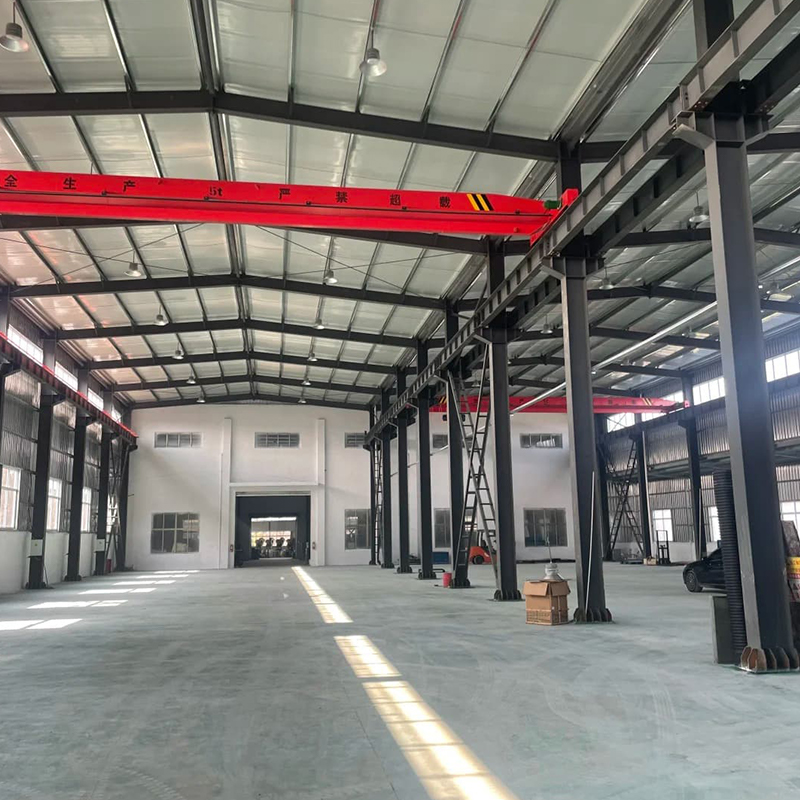
Warehouses, factories, aircraft hangars, and sports arenas all share one requirement: large, unobstructed interior space. A Steel Structure frame achieves this because steel's tensile and compressive strength allows beams to span much greater distances than an equivalent concrete or timber beam of similar depth, without needing intermediate columns that would interrupt the usable floor space.
Prefabrication Shortens the Construction Timeline
Steel components for a Steel Structure building are typically fabricated off-site in a controlled factory environment, then transported and bolted or welded together on site. This shifts a large share of the work away from weather-dependent, sequential on-site labor, which is one of the main reasons steel-framed buildings are often completed significantly faster than comparable reinforced concrete structures.
Steel Structure vs. Concrete: Where Each One Wins
Concrete is not obsolete alongside steel — the two materials are frequently combined in the same project, with steel handling long spans and concrete providing foundations, floor slabs, and fire-resistant cores. Concrete performs particularly well in compression and offers strong inherent fire resistance without additional treatment, while Steel Structure systems typically require added fireproofing coatings to meet the same fire rating.
On the other hand, steel outperforms concrete in situations demanding rapid construction, seismic flexibility, or later modification, since steel connections can often be unbolted and reconfigured, while altering a concrete structure typically requires demolition and rebuilding of the affected section.
Sustainability and Long-Term Value
Steel is one of the most recycled materials in the construction industry, since it can be melted down and reformed into new structural sections without any loss of strength or performance, unlike materials that degrade in quality through recycling processes. A Steel Structure building at the end of its service life can typically be disassembled and its components either reused directly or recycled into new steel, rather than sent to a landfill as demolition waste.
- Steel framing generally requires less structural material by weight than an equivalent-strength concrete design, reducing the overall resource footprint of the building.
- Off-site fabrication reduces on-site waste generation compared to poured concrete or masonry construction methods.
- A well-maintained steel structure, with proper corrosion protection, can remain in service for well over 50 years, spreading its embodied energy cost across a long usable lifespan.
Common Applications for Steel Structure Systems
- Industrial warehouses and logistics centers, where large clear-span interiors maximize usable storage and operational floor space.
- Bridges and infrastructure projects, where steel's strength-to-weight ratio allows longer spans with fewer supporting piers.
- Multi-story commercial and residential buildings, where steel framing allows faster vertical construction compared to cast-in-place concrete floors.
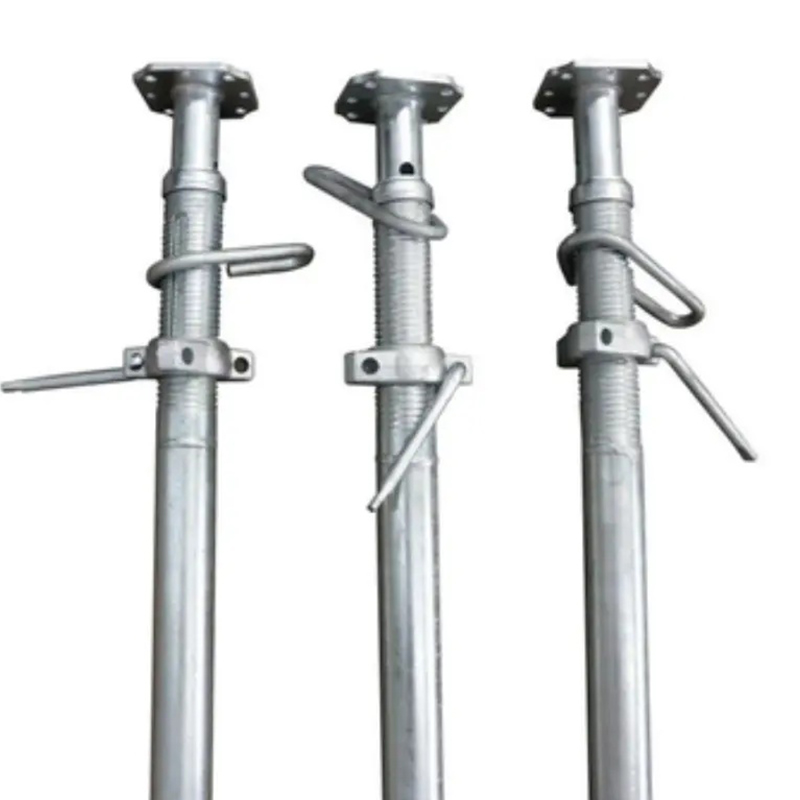
- Temporary and modular construction, including formwork systems used to shape concrete elements during other parts of a building's construction, where reusable steel components reduce material waste across multiple projects.
When Another Material Might Still Be the Better Choice
Despite its advantages, Steel Structure construction is not automatically the right answer for every project. Small single-family homes often favor wood framing, since the shorter spans involved don't require steel's extra strength, and timber remains widely available, familiar to local labor markets, and often less expensive at that scale. Similarly, projects prioritizing thermal mass and inherent fire resistance without additional coatings may lean toward concrete or masonry, particularly in regions where those materials and skilled labor are more readily available than structural steel fabrication.
Budget and local supply chains also play a role in this decision. In regions where steel mills and fabrication shops are far from the job site, transportation costs can erode some of the speed and efficiency advantages that make steel attractive elsewhere, making a locally sourced material more practical even if it isn't the strongest option on paper. The right material ultimately depends on matching the structural demands of the project against what can be sourced, fabricated, and erected efficiently in that specific location.
Choosing a Steel Structure Supplier for Your Project
Hyson supplies industrial Steel Structure systems alongside road and bridge formwork solutions, serving construction projects that require reliable large-span steel framing and durable, reusable formwork equipment. When evaluating a supplier for a steel structure project, it helps to confirm their fabrication capacity, quality certifications, and experience with the specific building type in question, whether that's an industrial plant, a bridge component, or a multi-story commercial frame.
For most large-scale, long-span, or fast-track construction needs, Steel Structure remains the building material best positioned to deliver strength, speed, and long-term recyclability together — provided the project is matched with a supplier capable of executing the design to the required engineering standard.


- Location
- Group 3, Fangzhuang Village, Rucheng Subdistrict, Rugao City, Nantong, Jiangsu, China
- Follow us
- Phone
- +86-13646196162
- info@hysonindustry.com
